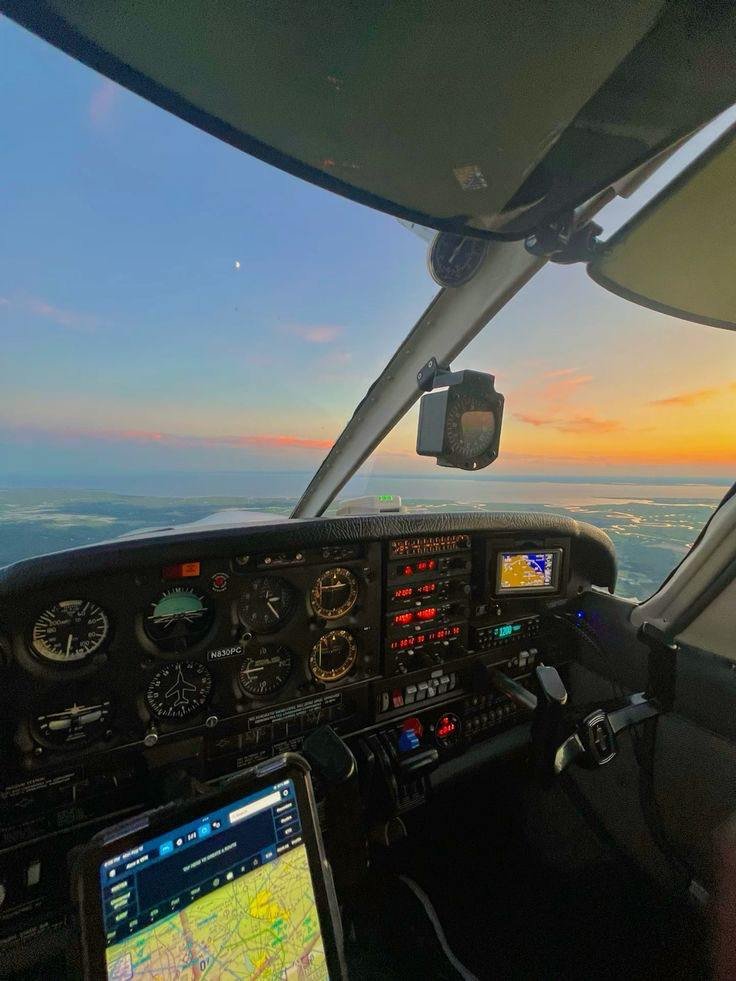
Learn to fly helicopters in Instrument Meteorological Conditions (IMC). The helicopter instrument rating qualifies you to operate under IFR — a requirement for EMS, offshore, and corporate helicopter careers.
Train under FAA Part 141 at Pelican Flight Training — fly the Schweizer 300C year-round in South Florida. Open the door to EMS, offshore, and corporate helicopter careers.
A helicopter instrument rating (IFR-H) is an FAA credential that allows you to fly helicopters under Instrument Flight Rules (IFR) — meaning you can navigate and land safely when you cannot see outside the aircraft. This includes flying through clouds, fog, rain, and other low-visibility conditions known as Instrument Meteorological Conditions (IMC).
Without an instrument rating, helicopter pilots are limited to Visual Flight Rules (VFR) only. This restricts when, where, and for whom you can fly. The instrument rating removes those restrictions and is widely regarded as one of the most important upgrades a helicopter pilot can earn.
The rating is issued under 14 CFR Part 61, §61.65 for the Rotorcraft-Helicopter category and class. It attaches to your existing pilot certificate — it is not a standalone license.
| Factor | Helicopter IFR | Airplane IFR |
|---|---|---|
| ACS (test standards) | Instrument Rating — Helicopter ACS | Instrument Rating — Airplane ACS |
| Unique approaches | Copter-only approaches (PinS, CAT A) | Standard ILS/VOR/GPS approaches |
| Approach minimums | Lower minimums for Category A aircraft | Standard category minimums |
| Hover & low-speed IMC | Trained — unique to helicopters | Not applicable |
| Cross-credit | IFR helicopter time counts toward airplane IR add-on | Airplane IFR time counts toward helicopter IR add-on |
| Career impact | Required for EMS, offshore, corporate | Required for airlines, charter, corporate |
If you hold a Private Pilot Certificate — Helicopter and want to advance your career, the instrument rating is the logical next step before pursuing your Commercial Pilot License (CPL-H).
The instrument rating requirements are defined by the FAA in 14 CFR §61.65. Below is everything you need to qualify for a helicopter instrument rating, organized by category.
| Requirement | Details |
|---|---|
| Pilot Certificate | Hold at least a Private Pilot Certificate — Helicopter (or be concurrently applying) |
| Language | Read, speak, write, and understand English |
| Medical Certificate | Current third-class FAA medical (minimum) or BasicMed |
| Age | No minimum age for the rating itself (17+ for PPL prerequisite) |
| TSA (non-US citizens) | AFSP registration and background check required |
You must pass the FAA Instrument Rating Knowledge Test before taking the practical exam. The test covers:
The instrument rating flight hour requirements differ depending on whether you train under Part 61 or Part 141. This is one of the most common questions from students.
| Requirement | Part 61 | Part 141 |
|---|---|---|
| Total instrument time | 40 hours | 35 hours |
| Instrument instruction with CFII | 15 hours | Per approved syllabus |
| Cross-country PIC time | 50 hours total (10 in helicopters) | No separate requirement |
| IFR cross-country flight | 250 nm, 3 different approach types | Included in curriculum |
| Simulator credit allowed | Up to 20 hours (AATD) | Up to 50% of total hours |
| Checkride prep (within 2 months) | 3 hours instrument with CFII | 3 hours instrument with CFII |
| Curriculum structure | Flexible | FAA-approved syllabus, stage checks |
Note: Pelican's helicopter instrument rating program operates under FAA Part 141, which means lower minimum hours and a structured, FAA-approved curriculum. The Part 141 path is generally more efficient and cost-effective.
The FAA Instrument Rating Helicopter Airman Certification Standards (ACS) defines the maneuvers and procedures you must demonstrate on the checkride:
Choosing between Part 61 and Part 141 instrument rating training is one of the biggest decisions new students face. Here is a detailed comparison:
| Factor | Part 61 | Part 141 |
|---|---|---|
| Minimum instrument hours | 40 hours | 35 hours |
| Curriculum | No required syllabus — flexible | FAA-approved structured syllabus |
| Stage checks | None required | Mandatory — ensures consistent progress |
| Cross-country requirement | 50 hours XC PIC (separate) | Integrated into program |
| Scheduling | Train at your own pace | Structured schedule, regular progress |
| Cost | Higher total (more hours needed) | Lower total (fewer minimum hours) |
| International students | Available | Preferred (visa compliance easier) |
| Best for | Working pilots, flexible schedules | Full-time students, career-track pilots |
Pelican operates as an FAA Part 141 and ACCSC accredited institution. Our IFR-H program follows a structured curriculum with built-in stage checks, which helps students progress efficiently and reduces total training costs.
Pelican's helicopter instrument rating program is a Part 141 course that takes you from VFR-only helicopter pilot to fully IFR-qualified. Training is conducted on the Schweizer 300C and FLYIT Simulator at North Perry Airport (KHWO) in Pembroke Pines, Florida.
Our ground school covers all FAA knowledge test topics in depth: IFR regulations, weather analysis, navigation systems, ATC procedures, approach plate reading, and cockpit resource management. Ground school also prepares you for the 60-question FAA knowledge exam.
The FLYIT helicopter simulator is an FAA-approved Advanced Aviation Training Device (AATD). Simulator training counts toward your total instrument time and allows you to practice instrument approaches, holding patterns, and emergency procedures in a safe, controlled environment — without the cost of helicopter flight time.
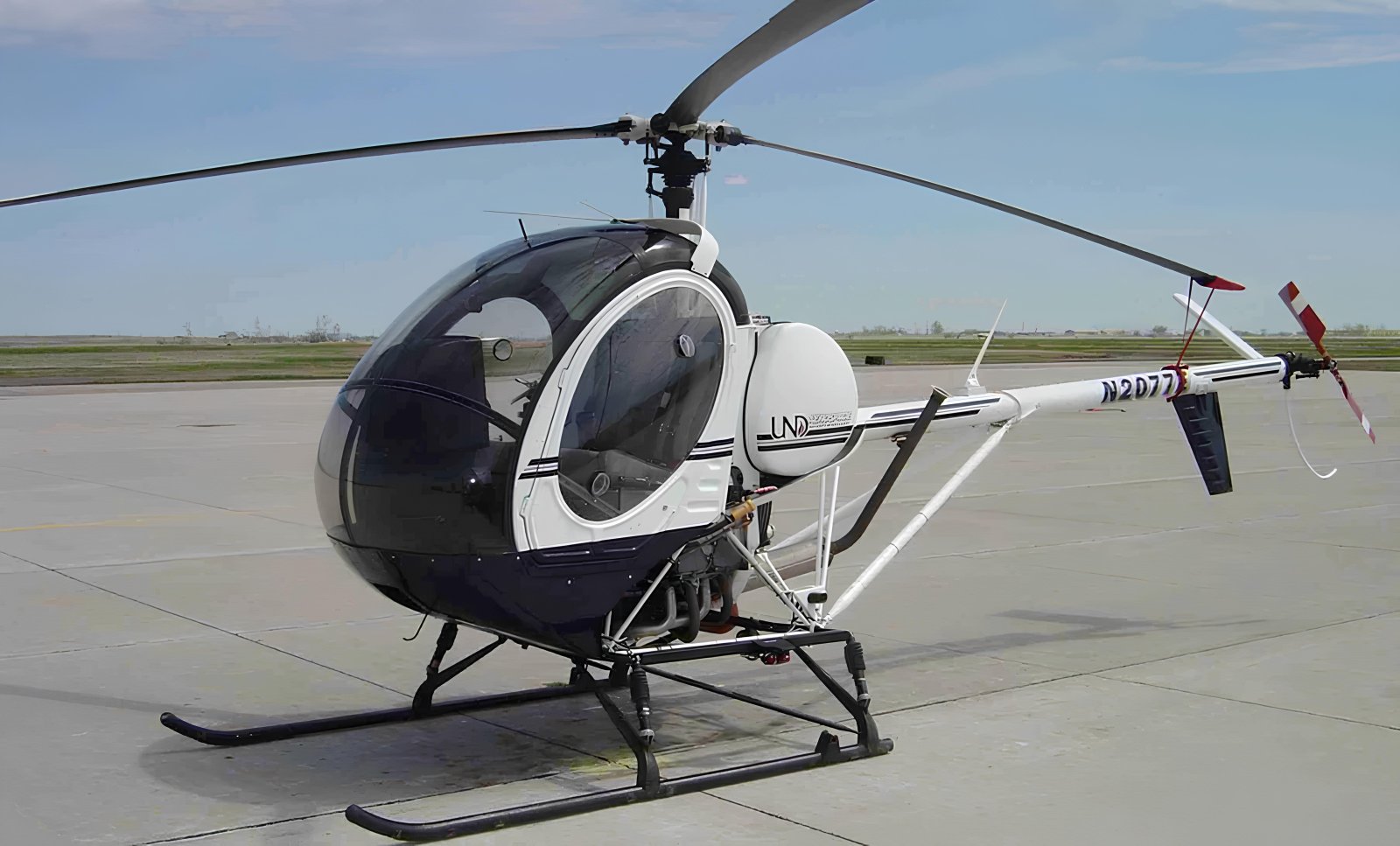
All helicopter flight training is conducted in the Schweizer 300C, equipped with IFR instrumentation including a Garmin navigation panel. You fly with a Certified Flight Instructor — Instrument (CFII) who guides you through VOR tracking, ILS approaches, GPS/RNAV procedures, and real-world IFR operations in South Florida's controlled airspace.
Pre-flight and post-flight briefings with your instructor cover flight planning, weather interpretation, approach review, and debriefing after each training flight. These sessions are critical for building the aeronautical decision-making skills tested on the checkride.
The instrument rating checkride consists of an oral exam and a flight evaluation with an FAA Designated Pilot Examiner (DPE). You must demonstrate proficiency in all areas of operation defined in the Instrument Rating — Helicopter ACS.
The total cost of Pelican's helicopter instrument rating program:
We are not asking for payments upfront. You will start paying for training when your visa is approved and you arrived in USA.
| Component | Hours | Included |
|---|---|---|
| Ground School | 30 hours | Yes |
| Flight Briefings | 19.5 hours | Yes |
| FLYIT Simulator | 18.5 hours | Yes |
| Dual Instruction (Schweizer 300C) | 20.5 hours | Yes |
| FAA Checkride Aircraft Fee | 1.5 hours | Yes |
| Books & Materials | — | Yes |
What's not included: FAA knowledge test fee (~$175), DPE examiner fee (~$600–$800), and living expenses. See our accommodation guide for housing costs in South Florida.
| School Type | Typical IFR-H Cost |
|---|---|
| Part 61 independent instructor | $18,000 – $25,000 |
| Part 141 flight school (average) | $16,000 – $22,000 |
| Pelican Flight Training (Part 141) | $16,300 |
Payment flexibility: International students do not pay upfront. Training payments begin after visa approval and arrival in the USA. View payment options.
At Pelican Flight Training, the helicopter instrument rating typically takes 6–8 weeks for full-time students and 3–4 months for part-time students.
| Training Pace | IFR-H Duration | Best For |
|---|---|---|
| Full-time (5–6 days/week) | 6–8 weeks | International students, career-track pilots |
| Part-time (2–3 days/week) | 3–4 months | Working pilots, local students |
Factors that affect training duration:
| Step | Certificate / Rating | Duration | Details |
|---|---|---|---|
| 1 | Private Pilot (PPL-H) | 3–4 months | Learn to fly, solo, first checkride |
| 2 | Instrument Rating (IFR-H) | 6–8 weeks | This course — fly in IMC, IFR procedures |
| 3 | Commercial Pilot (CPL-H) | 2–3 months | Commercial maneuvers, fly for compensation |
| 4 | Flight Instructor (CFI-H) | 1–2 months | Teach and build hours toward 1,500 |
Want the full pipeline from zero to professional pilot? See our Helicopter Professional Pilot Program.
An instrument rating is not just a regulatory requirement — it is a career accelerator. Here is how the helicopter instrument rating impacts your professional opportunities:
Read more about industry trends on our pilot demand and shortage page.
Pelican Flight Training has been training helicopter and airplane pilots at North Perry Airport (KHWO) in Pembroke Pines since 1985. Here is why students from over 50 countries choose us for their helicopter IFR training:
See what our graduates have achieved and read student reviews.
Under 14 CFR §61.65, you need: a Private Pilot Certificate (Helicopter), English proficiency, a current third-class medical certificate, 50 hours of cross-country PIC time (Part 61), 40 hours of instrument time (Part 61) or 35 hours (Part 141), and passing scores on both the FAA knowledge test and practical checkride. See the full admission requirements.
At Pelican, the IFR-H program takes 6–8 weeks for full-time students (5–6 days/week) or 3–4 months for part-time students. Florida's year-round weather eliminates seasonal delays that can add months at northern schools.
Pelican's IFR-H program costs $16,300, which includes 30 hours ground school, 18.5 hours simulator, 20.5 hours dual instruction in Schweizer 300C, 19.5 hours briefings, and checkride aircraft fee. FAA knowledge test (~$175) and DPE fee (~$600–$800) are additional. The industry average is $18,000–$25,000. See our payment options.
Part 141 follows an FAA-approved structured curriculum with 35-hour minimum instrument time, mandatory stage checks, and integrated cross-country training. Part 61 requires 40 hours minimum but offers flexible scheduling. Pelican uses Part 141 — a more efficient path with lower total cost. See our accreditation details.
Not for VFR-only flying, but most professional helicopter jobs require it. EMS/HEMS operators, offshore companies, and corporate flight departments require or strongly prefer IFR-rated pilots. Without it, you are limited to VFR tours and some agricultural work. The instrument rating also significantly improves safety by training you to handle inadvertent IMC.
Yes. While the core IFR principles are the same, helicopter IFR uses different Airman Certification Standards (ACS), includes helicopter-specific procedures like Point-in-Space (PinS) approaches and Category A minimums, and requires managing unique aerodynamic challenges during instrument flight. However, instrument time in one aircraft category can count toward the other for an add-on rating.
Pelican uses the Schweizer 300C for all helicopter training, including the instrument rating. The aircraft is equipped with IFR instrumentation and a Garmin navigation panel. We also use the FLYIT simulator (FAA-approved AATD) for 18.5 hours of the program, reducing total cost. View our full aircraft fleet.
The FAA Instrument Rating Knowledge Test has 60 multiple-choice questions with a 2.5-hour time limit. You need 70% to pass (42 correct). Topics include IFR regulations, weather, navigation systems, ATC procedures, and instrument flight operations. Results are valid for 24 months. Our 30-hour ground school fully prepares you for this exam.
Yes. The FAA allows up to 20 hours in an approved AATD (Advanced Aviation Training Device) under Part 61, or up to 50% of total hours under Part 141. Pelican's program includes 18.5 hours on the FLYIT simulator, which is FAA-approved. Simulator time saves money and allows focused practice of instrument approaches and emergency procedures.
Under Part 61, you need 50 hours of cross-country PIC time (at least 10 in helicopters) plus one IFR cross-country flight of at least 250 nautical miles with three different types of instrument approaches at three different airports. Under Part 141, cross-country requirements are integrated into the structured curriculum.
Yes. Pelican welcomes students from over 50 countries. You need an M-1 or F-1 visa and TSA AFSP clearance (background check for non-US citizens at flight schools). Pelican issues I-20 forms directly — no university enrollment required. See our complete international student guide.
The IFR rating opens doors to the highest-paying helicopter sectors: EMS/HEMS ($70K–$100K), offshore oil & gas ($80K–$120K), corporate/VIP transport ($90K–$130K+), and law enforcement ($60K–$85K). IFR-rated pilots earn 15–25% more than VFR-only pilots. See our pilot demand page for industry data.
To stay IFR current, you must complete within the preceding 6 calendar months: 6 instrument approaches, holding procedures, and intercepting/tracking courses. If you lapse, you need an Instrument Proficiency Check (IPC) with a CFII before flying IFR again. Regular practice is recommended.
The typical progression is: PPL-H → Instrument Rating (this course) → Commercial Pilot License (CPL-H) → Certified Flight Instructor (CFI-H). With IFR + CPL-H combined, you are eligible for most commercial helicopter operations. See our Professional Pilot Program for the complete package.
Standard IFR minimums apply, but helicopters have advantages: Category A approach minimums are lower than Category B/C/D (airplane). Helicopters can also fly Point-in-Space (PinS) approaches to locations without runways. Under Part 91, there are no takeoff minimums for helicopters (unlike Part 135 commercial operations, which have specific ceiling and visibility requirements).
Join pilots from over 50 countries who have trained at Pelican Flight Training since 1985. Our admissions team will guide you through every step — from enrollment to your IFR checkride.
FROM ZERO TO AIRLINE PILOT Commercial Pilot License in 10-15 months / Price $83,950 – Pay after visa approval
Get Commercial Pilot License based on 2 types of training visas M1/F1:
Foreign Pilot Conversion build 1500 hours of flight experience
Convert your ICAO / EASA license to FAA and take CFIs courses.
Become a CFI and build your flight expirience
Build 1500 hours airline hiring minimums.
Visa option: F1 – train, work, and gain experience in the USA
Learn more Start Flying
FROM PPL HOLDERS Commercial Pilot License in 10-15 months / Price $58,207 – pay after visa approval
Get Commercial Pilot License based on F1 Visa
All Programs airlane and helicopter programs
Need help?
Get free consultation with our school officer about your aviation career and find the best path to your goals.
Welcome to Pelican Flight Training, Florida's premier flight school offering one of the best training programs for pilots from around the world. We offer a structured program that will take you all the way from private pilot rank to ATP and airline readiness.
In this video, you'll learn what makes our flight school so special — the passion, the professionalism, and the world-class fleet of aircraft used for training. From your first flight to becoming a professional pilot, we will be with you every step of the way.
Take a look right now and see why training at Pelican isn't just about learning — it's about transformation.
Start Flying


Want to become a pilot? Get a free consultation today!
Fill out the form and get a free PDF guide: ‘Your First Steps to an Airline Career’!
We will be happy to personally assist you in making decision for your future airline career by providing you with all the information you might need and providing answers to all of your questions. Please complete the form, and we will be in touch with you soon.