Train on the Schweizer 300C. Fly 365 days a year. Launch your helicopter career.
The commercial helicopter pilot license (CPL-H) is your gateway to a professional flying career. Whether you want to fly EMS helicopters, lead aerial tours, or work in corporate aviation — it starts here.
A commercial helicopter pilot license (CPL-H) is an FAA certificate that allows you to be paid to fly. While a Private Pilot License lets you fly for personal use, the commercial certificate opens the door to employment as a professional helicopter pilot.
The CPL-H is issued under 14 CFR Part 61 for the Rotorcraft-Helicopter category and class. It is generally the third step in your flight training journey — after Private Pilot and (optionally) Instrument Rating.
With a commercial helicopter license you can work as a tour pilot, EMS pilot, agricultural applicator, aerial photographer, law enforcement pilot, corporate transport pilot, and more. If you are starting from scratch, consider our complete Helicopter Professional Pilot Program that takes you from zero experience to CFI.
| Factor | Private (PPL-H) | Commercial (CPL-H) |
|---|---|---|
| Fly for pay? | No — personal use only | Yes — employed as a pilot |
| Minimum flight hours | 40 hours | 150 hours |
| Medical certificate | Third-class (or BasicMed) | Second-class |
| Minimum age | 17 years | 18 years |
| Maneuver standards | ACS private standards | Tighter commercial ACS tolerances |
| Career value | Recreational flying | Professional employment |
To earn your commercial helicopter pilot certificate under FAA Part 61, you must meet the following requirements:
| Requirement | Details |
|---|---|
| Age | At least 18 years old |
| Language | Read, speak, write, and understand English |
| Medical Certificate | Second-class FAA medical (or higher) |
| Prerequisite | Hold at least a Private Pilot Certificate — Helicopter |
| Total Flight Time | Minimum 150 hours total (Part 61) |
| PIC Time | 100 hours pilot-in-command |
| Cross-Country PIC | 50 hours cross-country as PIC |
| Night Flight | 5 hours night VFR, including 10 takeoffs/landings |
| Instrument Training | 10 hours instrument instruction in helicopters |
| Written Exam | FAA Commercial Pilot Knowledge Test (pass before checkride) |
| Practical Test | Checkride with an FAA Designated Pilot Examiner (DPE) |
International students: All non-US citizens must also complete TSA AFSP registration and background check before starting training. See our international students guide for the full visa and enrollment process.
Here is the typical path to earning your commercial helicopter license at Pelican Flight Training:
| Step | Phase | Duration | What Happens |
|---|---|---|---|
| 1 | Private Pilot (PPL-H) | 3–4 months | Learn to fly, solo, and pass your first FAA checkride. Minimum 40 flight hours. |
| 2 | Build Flight Hours | 1–4 months | Accumulate 150 total hours through solo practice, cross-country flights, and skill refinement. |
| 3 | Instrument Rating (optional) | 2–3 months | Fly in IFR conditions. Not required for CPL-H, but strongly recommended — most EMS and corporate jobs require it. |
| 4 | Commercial Training (CPL-H) | 2–3 months | Advanced autorotations, confined areas, steep approaches, night VFR, commercial maneuver standards. |
| 5 | FAA Exams | 1–2 weeks | Pass the written knowledge test and practical checkride (oral + flight) with an FAA Designated Pilot Examiner. |
| 6 | Start Your Career | — | Apply to tour operators, EMS companies, or continue to CFI certification to build hours and earn while yo |
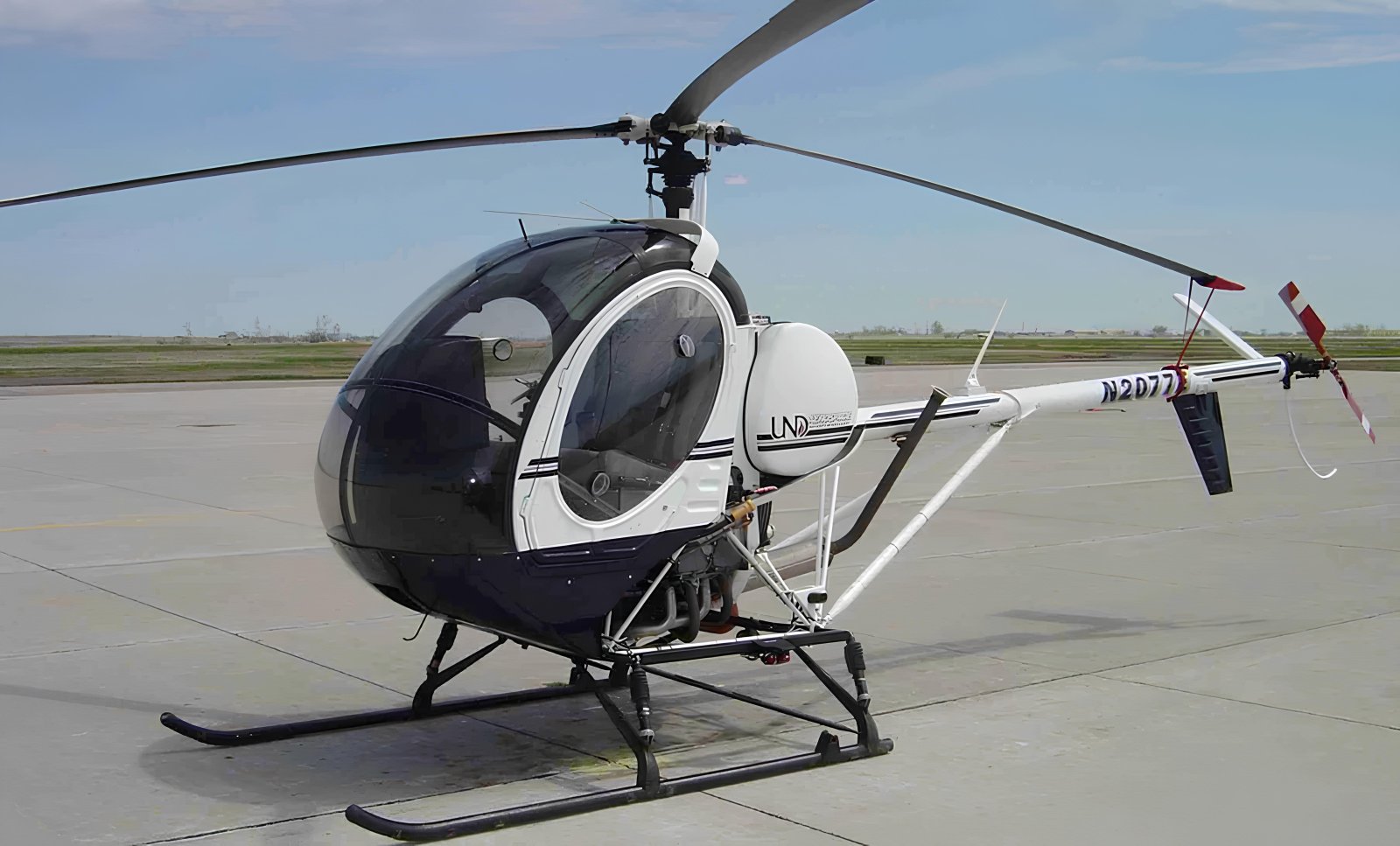
Pelican's CPL-H program is a Part 61 course designed to take pilots who already hold a Private Pilot Certificate (Helicopter) to commercial-level proficiency. Training is conducted on the Schweizer 300C at North Perry Airport (KHWO) in Pembroke Pines, Florida.
The Schweizer 300C is one of the most widely used training helicopters in the United States. It is known for its rugged construction, fully articulated rotor system, and forgiving handling characteristics — making it ideal for developing the precise skills required for commercial operations. Many FAA Part 141 and Part 61 programs use it as their primary trainer.
Pelican's CPL-H course operates under FAA Part 61. Here is how it compares to Part 141 structured programs:
| Factor | Part 61 | Part 141 |
|---|---|---|
| Minimum hours (CPL-H) | 150 hours total | 120 hours total |
| Curriculum | Flexible — tailored to student pace | FAA-approved structured syllabus |
| Scheduling | Train at your own pace | Fixed schedule, stage checks |
| Cost | Often lower per hour | Structured but can be higher |
| VA / GI Bill eligible? | Varies by school | Yes (at approved schools) |
| Best for | Experienced pilots, career changers, flexible schedules | Full-time students, veterans |
Pelican is both FAA Part 141 approved and ACCSC accredited for its airplane and helicopter programs. Our CPL-H course uses the Part 61 framework for maximum flexibility, while maintaining the quality standards of a Part 141 institution.
A second-class FAA medical certificate is required for commercial pilot privileges. The exam is conducted by an FAA-designated Aviation Medical Examiner (AME). Key requirements include:
If you don't have a medical certificate, our admissions team schedules your AME appointment after arrival. The exam typically costs $100–$200. Contact us if you have questions about medical eligibility.
The total cost of Pelican's commercial helicopter pilot training program:
We are not asking for payments upfront. You will start paying for training when your visa is approved and you arrived in USA.
| Component | Hours | Included |
|---|---|---|
| Ground School | 20 hours | Yes |
| Flight Briefings | 10 hours | Yes |
| FLYIT Simulator | 11 hours | Yes |
| Dual Instruction (Schweizer 300C) | 20 hours | Yes |
| Solo Flight (Schweizer 300C) | 46.5 hours | Yes |
| FAA Checkride Aircraft Fee | 1.2 hours | Yes |
| Books & Materials | — | Yes |
What's not included: FAA written exam fee (~$175), DPE examiner fee (~$600–$800), FAA medical exam (~$100–$200), and living expenses. See our accommodation guide for housing costs in South Florida.
Payment flexibility: International students do not pay upfront. Training payments begin after visa approval and arrival in the USA. View payment options.
At Pelican Flight Training, CPL-H training typically takes 2–3 months for the commercial course itself (assuming you already hold a PPL-H and have the required flight hours).
The total timeline from zero experience to commercial certificate depends on your training frequency:
| Training Pace | PPL-H | Hour Building | CPL-H | Total |
|---|---|---|---|---|
| Full-time (5–6 days/week) | 3 months | 1–2 months | 2 months | 6–7 months |
| Part-time (2–3 days/week) | 5–6 months | 3–4 months | 3 months | 11–13 months |
Florida's year-round flying weather means virtually zero weather cancellations, which is one of the biggest factors in completing training on time. Students in northern states routinely lose 4–6 months of training per year due to weather.
Want to complete the full pipeline from zero to professional pilot? See our Helicopter Professional Pilot Program.
The commercial helicopter pilot salary varies significantly by job type, experience, and location. Here is what you can expect in the US market:
| Career Path | Typical Salary (USD/year) | Min. Hours |
|---|---|---|
| Flight Instructor (CFI-H) | $35,000 – $50,000 | 200–300 |
| Tour Pilot | $40,000 – $55,000 | 500–1,000 |
| Utility / Agriculture | $50,000 – $75,000 | 500–1,500 |
| Law Enforcement | $60,000 – $85,000 | 1,000–2,000 |
| EMS / HEMS | $70,000 – $100,000 | 2,000–3,000 |
| Offshore / Oil & Gas | $80,000 – $120,000 | 2,000+ |
| Corporate / VIP | $90,000 – $130,000+ | 2,500+ |
According to Boeing's 2023 Pilot and Technician Outlook, over 600,000 new pilots will be needed globally by 2042, with North America requiring more than 130,000. The helicopter sector is especially underserved in EMS, firefighting, and law enforcement. Read more about the global pilot shortage.
Pelican Flight Training has been training helicopter and airplane pilots at North Perry Airport (KHWO) in Pembroke Pines since 1985. Here is why students from over 50 countries choose us for their commercial helicopter pilot training:
See what our graduates have achieved and read student reviews.
| Program | Duration | Details |
|---|---|---|
| Professional Pilot Program "H" | 18 months | Zero to CFI — complete helicopter career track |
| Private Pilot (PPL-H) | 3–4 months | First FAA certificate, learn to fly helicopters |
| Instrument Rating (IR-H) | 2–3 months | Fly in IMC conditions, required for many jobs |
| Commercial Pilot (CPL-H) | 2–3 months | This course — fly for compensation |
| Certified Flight Instructor (CFI-H) | 1–2 months | Teach and build hours toward 1,500 |
| CFI Instrument (CFII-H) | 2–4 weeks | Teach instrument students |
Explore all programs and courses or speak with admissions to find the best path for your goals.
Pelican also offers a complete range of airplane training programs. Many helicopter pilots add airplane ratings to expand their career options:
Considering both airplane and helicopter? See our Zero to Airline Pilot program or career guide for commercial pilots.
If you don't yet have a PPL-H, start with our Private Pilot program. For students starting from zero who want the full career path, our Professional Pilot Program "H" covers everything from PPL through CFI.
The CPL-H course itself takes 2–3 months at Pelican. The total time from zero experience to commercial certificate is 6–13 months depending on training frequency. Florida's year-round weather means no seasonal delays.
Pelican's CPL-H program costs $26,359 (with discount). This includes 20 hours ground school, 66.5 hours of solo and dual helicopter time, 11 hours simulator, and checkride aircraft fee. Additional costs include the FAA written exam (~$175) and DPE fee (~$600–$800). See the full pricing presentation (PDF).
A CPL-H allows you to work as a paid helicopter pilot. Common careers include flight instruction, aerial tours, EMS/air ambulance, law enforcement, agricultural aviation, offshore transport, corporate flying, and aerial photography. Entry-level positions (tours, CFI) typically require 500–1,000 hours.
Yes. Entry-level tour and CFI positions pay $35,000–$55,000. Experienced EMS pilots earn $70,000–$100,000. Corporate and offshore pilots can earn $80,000–$130,000+. Salaries vary by job type, experience, and region. See our pilot demand page for market data.
Yes, the helicopter industry faces a significant pilot shortage. Boeing projects over 600,000 new pilots needed globally by 2042. Demand is especially strong in EMS, firefighting, law enforcement, and energy sectors. Read more on our pilot demand page.
A Private Pilot License (PPL-H) allows you to fly helicopters but not for compensation. A Commercial Pilot License (CPL-H) qualifies you to be paid as a pilot. CPL requires more flight hours (150 vs. 40 minimum), higher skill standards, and a second-class medical certificate.
No, an instrument rating is not required for the CPL-H. However, it is strongly recommended. Most EMS and corporate helicopter jobs require instrument proficiency, and having the rating makes you significantly more competitive in the job market.
Yes. Pelican welcomes students from over 50 countries. We support both F-1 and M-1 visas and issue I-20 forms directly — no university enrollment required. International students must complete TSA AFSP registration. See our complete international student guide.
Pelican uses the Schweizer 300C for all helicopter training including CPL-H. The Schweizer 300C is one of the most widely used training helicopters in the USA, known for its rugged construction and fully articulated rotor system. It is also used by the US military for initial rotorcraft training. View our full fleet of aircraft.
The CPL-H checkride consists of two parts: an oral exam (1–2 hours) covering regulations, aerodynamics, weather, systems, and flight planning; and a flight evaluation (1–1.5 hours) where you demonstrate commercial maneuvers including steep approaches, confined area operations, advanced autorotations, and precision hovering. You must meet the tolerances defined in the FAA Commercial Pilot Airman Certification Standards (ACS).
Part 61 requires 150 total flight hours but offers flexible scheduling. Part 141 can reduce minimums to 120 hours but follows a strict FAA-approved syllabus with mandatory stage checks. Pelican's CPL-H program uses the Part 61 framework, giving students the flexibility to train at their own pace while maintaining the quality standards of a nationally accredited institution.
It depends on the job. Flight instructor (CFI) positions require as few as 200–300 hours. Tour operators typically want 500–1,000 hours. EMS/HEMS positions usually require 2,000–3,000 hours, including instrument and night time. Becoming a CFI after your CPL-H is the most popular way to build hours quickly.
No. The CPL-H is specific to the Rotorcraft-Helicopter category and class. To fly airplanes commercially, you need a separate Commercial Pilot Certificate — Airplane. However, some flight hours may cross-credit between categories. Pelican offers both airplane and helicopter programs.
You need at least a second-class FAA medical certificate, issued by an Aviation Medical Examiner (AME). The exam includes vision tests (20/20 correctable), hearing, cardiovascular screening, and general health evaluation. The certificate is valid for 12 months (under 40) or 6 months (40+) for commercial operations. Contact our admissions team if you have questions about medical eligibility.
No. Pelican does not require upfront payment for international students. You begin paying for training after your visa is approved and you arrive in the USA. This applies to both F-1 and M-1 visa students. See our payment options or download the CPL-H pricing presentation.
Join thousands of pilots who have trained at Pelican Flight Training since 1985. Our admissions team will guide you through every step — from enrollment to your first commercial flight.
FROM ZERO TO AIRLINE PILOT Commercial Pilot License in 10-15 months / Price $83,950 – Pay after visa approval
Get Commercial Pilot License based on 2 types of training visas M1/F1:
Foreign Pilot Conversion build 1500 hours of flight experience
Convert your ICAO / EASA license to FAA and take CFIs courses.
Become a CFI and build your flight expirience
Build 1500 hours airline hiring minimums.
Visa option: F1 – train, work, and gain experience in the USA
Learn more Start Flying
FROM PPL HOLDERS Commercial Pilot License in 10-15 months / Price $58,207 – pay after visa approval
Get Commercial Pilot License based on F1 Visa
All Programs airlane and helicopter programs
Need help?
Get free consultation with our school officer about your aviation career and find the best path to your goals.
Welcome to Pelican Flight Training, Florida's premier flight school offering one of the best training programs for pilots from around the world. We offer a structured program that will take you all the way from private pilot rank to ATP and airline readiness.
In this video, you'll learn what makes our flight school so special — the passion, the professionalism, and the world-class fleet of aircraft used for training. From your first flight to becoming a professional pilot, we will be with you every step of the way.
Take a look right now and see why training at Pelican isn't just about learning — it's about transformation.
Start Flying


Want to become a pilot? Get a free consultation today!
Fill out the form and get a free PDF guide: ‘Your First Steps to an Airline Career’!
We will be happy to personally assist you in making decision for your future airline career by providing you with all the information you might need and providing answers to all of your questions. Please complete the form, and we will be in touch with you soon.